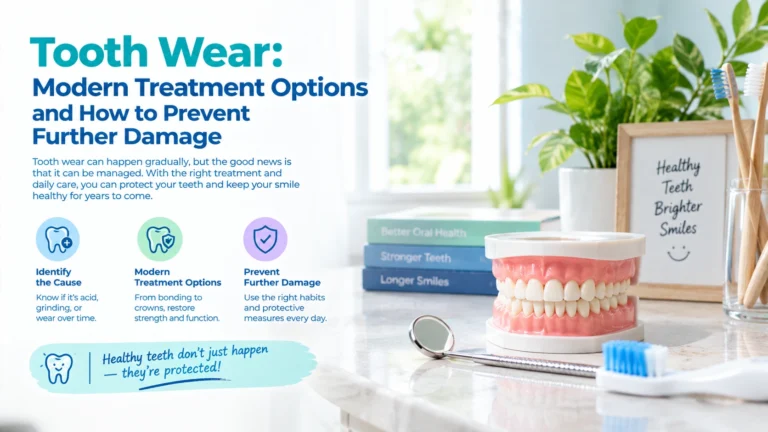

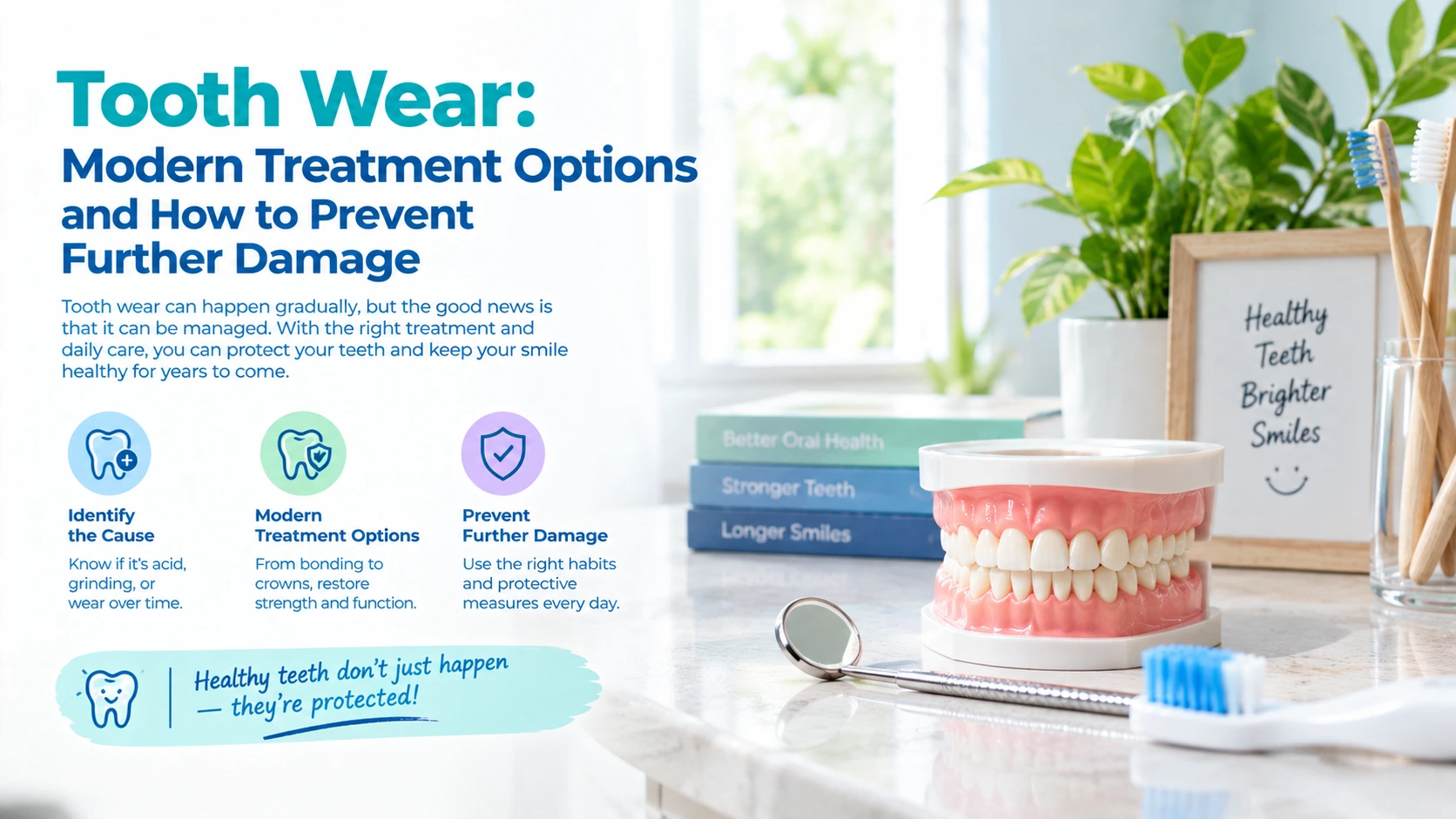
If you have noticed that your teeth look shorter, flatter, or more sensitive than they used to, you are probably searching for answers about tooth wear. People who type this into a search engine usually want three things: to understand what is happening to their teeth, to know whether it can be fixed, and to learn how to stop it from getting worse. This guide covers all three in plain language. It explains the causes, the modern treatment options available today, and the daily habits that protect your enamel, with practical advice from Dr. Pratik Kotadia and the team at Kotadias Dental Care.
What Is Tooth Wear?
Tooth wear is the gradual loss of tooth structure from causes other than decay or injury. It is a normal part of ageing to a small degree, but when it happens quickly or becomes visible, it needs professional attention. Because enamel cannot regenerate once it is lost, early diagnosis is the single most important factor in protecting your smile. Ignoring the signs often leads to more complex and costly treatment later.
The Three Main Types of Tooth Wear
- Attrition: wear caused by tooth-to-tooth contact, most often from grinding or clenching, especially during sleep.
- Abrasion: wear caused by external objects or habits, such as aggressive brushing, hard-bristled brushes, abrasive toothpaste, or chewing on pens and nails.
- Erosion: chemical loss of enamel from acid, which may come from fizzy drinks, citrus, frequent snacking, acid reflux, or vomiting.
In real life, most patients show a combination of these, which is why a careful examination matters more than a quick glance.
Common Signs You Should Not Ignore
Tooth wear develops slowly, so many people adapt without realising it. Watch for sensitivity to hot, cold, or sweet foods, teeth that look shorter or have flat biting edges, small chips along the edges, yellowing as the darker dentine underneath shows through, and cupped or dented spots on the chewing surfaces. Jaw soreness or morning headaches can also point towards night-time grinding. If any of these sound familiar, it is wise to get your teeth examined before the damage progresses.
Why Early Diagnosis Matters
Enamel is the hardest substance in the human body, yet it has no living cells to repair itself. Once it thins, the softer dentine beneath wears down much faster, which makes sensitivity and further loss accelerate. Regular visits to a trusted Dentist In Bibwewadi allow wear to be spotted when it is still minor, tracked over time with photographs and records, and managed with simple measures instead of major restorations.
How Dentists Diagnose Tooth Wear
A thorough assessment starts with a conversation about your diet, brushing routine, sleep, stress, and any reflux or medical conditions. The dentist then examines your teeth, bite, and jaw joints, and may take digital X-rays and clinical photographs to create a baseline. The goal is not only to measure how much tooth has been lost but also to identify why, because treatment without addressing the cause rarely lasts.
Modern Treatment Options for Tooth Wear
The right treatment depends on how severe the wear is, how much tooth structure remains, and what is driving the problem. Today’s dentistry offers conservative, tooth-preserving options that were not available a generation ago.
1. Preventive and Monitoring Care
For mild wear, the focus is on protection. This may include fluoride or remineralising treatments, desensitising toothpaste, dietary advice, and regular monitoring. Many patients never need more than this if the cause is controlled early.
2. Night Guards and Occlusal Splints
If grinding or clenching is the main culprit, a custom-made night guard acts as a protective cushion between the upper and lower teeth. Unlike off-the-shelf versions, a custom guard fits precisely, feels comfortable, and reduces strain on the jaw muscles as well.
3. Dental Bonding
Tooth-coloured composite resin can rebuild worn edges and cover exposed dentine, often in a single visit and with little or no removal of healthy tooth. Bonding is a popular choice for small to moderate wear because it is reversible, affordable, and blends well with natural teeth.
4. Veneers and Onlays
When wear is more advanced, ceramic veneers on front teeth or onlays on back teeth restore shape, strength, and appearance. They are durable and natural-looking, and they preserve far more tooth structure than a full crown.
5. Crowns for Severe Wear
Where a large part of the tooth has been lost, a full-coverage crown rebuilds the tooth and protects what remains. Modern materials such as zirconia and high-strength ceramics offer excellent durability and a lifelike finish.
6. Full-Mouth Rehabilitation
In advanced cases where many teeth are affected and the bite height has collapsed, a carefully planned full-mouth rehabilitation can restore function and aesthetics together. This requires detailed planning, digital records, and often a phased approach.
When Tooth Wear Reaches the Nerve
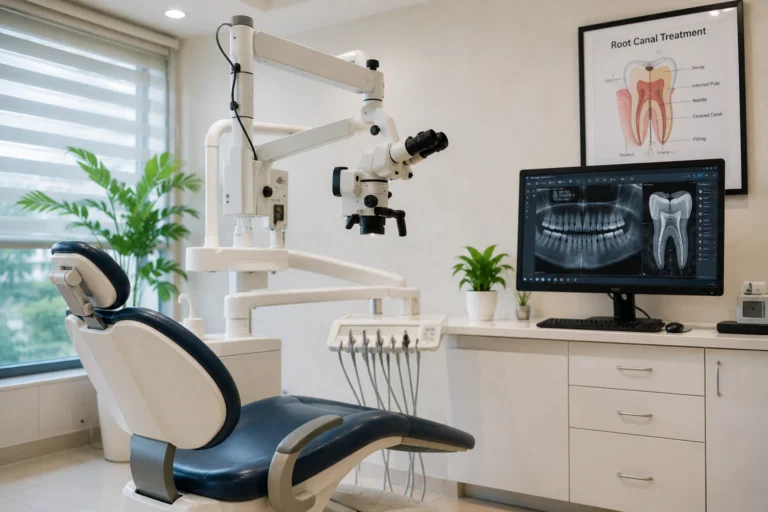
In severe cases, wear can expose the inner pulp, leading to persistent pain, infection, or abscess formation. When this happens, saving the tooth may require endodontic care. Consulting an experienced Root Canal Specialist in Pune at this stage can mean the difference between preserving your natural tooth and losing it. After root canal therapy, the weakened tooth is usually protected with a crown so it can withstand normal chewing forces.
How to Prevent Further Tooth Wear
Treatment restores what has been lost, but prevention protects your investment. These habits make a real difference:
- Brush gently: use a soft-bristled brush and light pressure, and avoid scrubbing side to side.
- Wait after acidic foods: do not brush for at least 30 minutes after fizzy drinks, citrus, or acidic foods, as enamel is temporarily softened.
- Limit acid exposure: sip acidic drinks through a straw, finish them quickly rather than over hours, and rinse with water afterwards.
- Manage grinding: wear a night guard if advised, and work on stress reduction and sleep habits.
- Treat reflux: see a physician if you have frequent heartburn, since stomach acid is a major cause of erosion.
- Avoid harmful habits: do not chew ice, pen caps, or fingernails, and never open packets with your teeth.
- Choose the right products: use fluoride toothpaste with low abrasivity, and ask your dentist about remineralising products.
- Keep regular check-ups: professional reviews every six months catch changes early.
Choosing the Right Dental Care Provider
Tooth wear treatment is not a one-size-fits-all service. The best results come from a dentist who investigates the cause, explains every option honestly, and prioritises conservative care. Patients searching for the Best Dentist In Bibwewadi generally look for clear communication, careful diagnosis, modern materials, and a treatment plan that respects both their budget and their natural teeth.
Care You Can Trust at Kotadias Dental Care
Dr. Pratik Kotadia follows a patient-first approach to restorative and preventive dentistry. At Kotadias Dental Care, each patient receives a detailed examination, a clear explanation of what is causing their tooth wear, and a step-by-step plan that begins with the least invasive option. Whether you need a custom night guard, bonding, veneers, or more advanced restorative work, the focus stays on long-term oral health and comfort. For many local families, it has become the Best dental clinic in Bibwewadi for dependable, transparent, and gentle care.
Frequently Asked Questions
Q1. Can worn teeth grow back?
No. Enamel cannot regenerate, but early remineralisation treatments can strengthen weakened areas, and restorations can rebuild lost shape and function.
Q2. Is tooth wear painful?
Not always. Mild wear may cause no symptoms, while advanced wear often brings sensitivity or pain when dentine or the pulp is exposed.
Q3. Does a night guard really help?
Yes. A well-fitted night guard does not stop grinding itself, but it absorbs the force and prevents teeth from wearing against each other.
Q4. How long do bonding and veneers last?
With good care, bonding often lasts several years, and porcelain veneers can last considerably longer. Lifespan depends on your habits, bite, and oral hygiene.
Q5. Can children and young adults get tooth wear?
Yes. Acidic drinks, grinding, and reflux can affect any age group, which is why regular check-ups are recommended for everyone.
Protect Your Smile: Book a Consultation Today
Every month of delay allows more enamel to be lost permanently. If your teeth are looking shorter, feeling sensitive, or showing flat or chipped edges, a short examination can tell you exactly where you stand and what can be done. Book an appointment with Dr. Pratik Kotadia at Kotadias Dental Care today and take the first step towards stopping tooth wear before it becomes a bigger problem.
Phone Number:- 8329481897