 28 Jan 2026
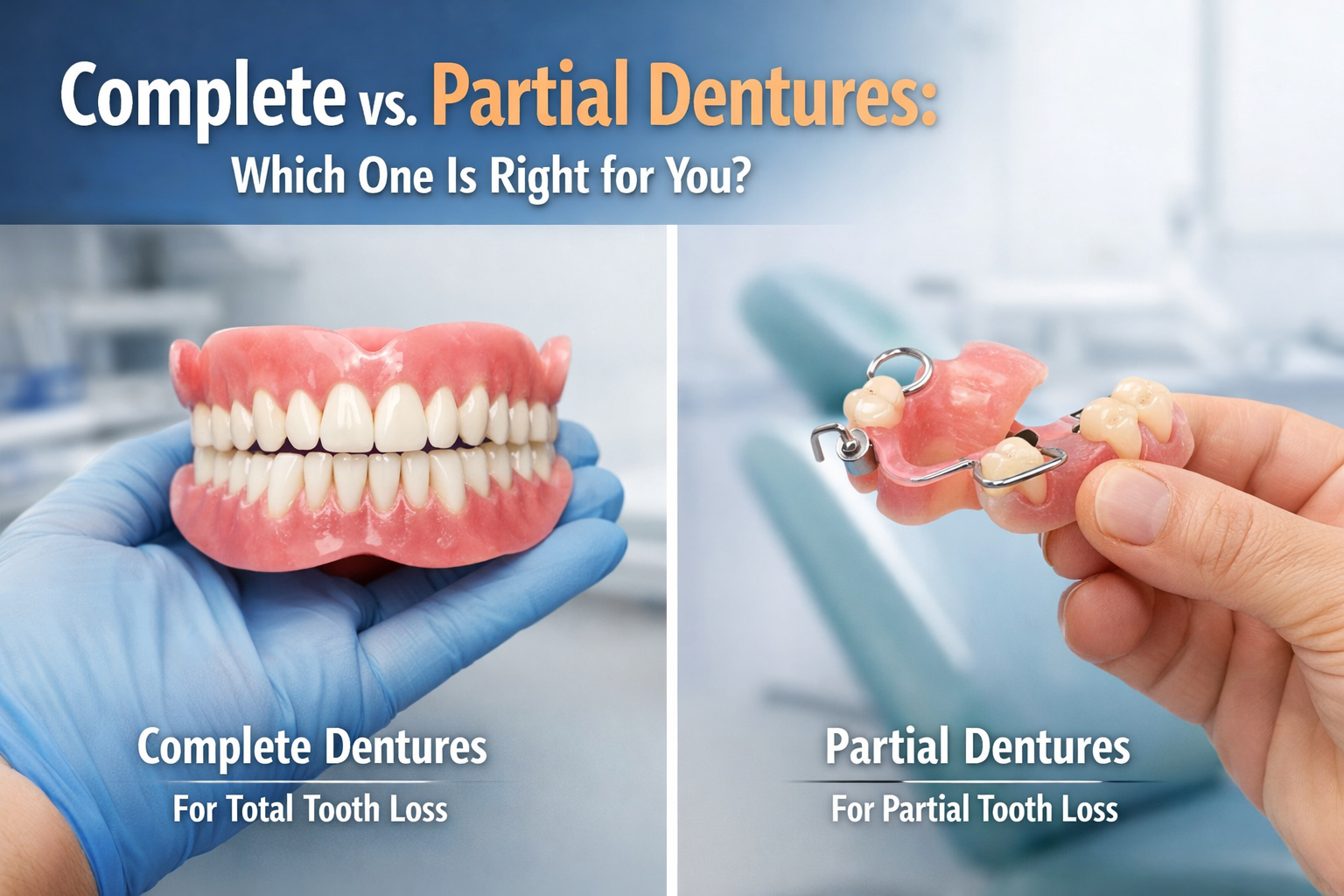
Complete vs. Partial Dentures: Which One Is Right for You?
Losing teeth can affect not only your smile but also your ability to eat, speak, and maintain oral health. Dentures are a trusted solution for replacing missing teeth and restoring confidence. But with so many options, how do you know whether complete dentures or partial dentures are right for you? Dr. Pratik Kotadia at Kotadias Dental Care, the Best Dental Clinic In Bibwewadi, shares expert insights to help you make the best choice for your oral health.
Understanding Dentures
What Are Dentures?
Dentures are removable dental appliances designed to replace missing teeth. They help restore the function and appearance of your teeth, allowing you to eat, speak, and smile with confidence. Dentures come in two main types: complete dentures, which replace all teeth in the upper or lower jaw, and partial dentures, which replace only a few missing teeth while preserving your remaining natural teeth.
Why Dentures Are Important
Missing teeth can lead to bone loss, shifting of remaining teeth, and changes in facial structure. Dentures help maintain the shape of your face, improve chewing efficiency, and boost self-esteem. Regular consultations with a dentist, like Dr. Pratik Kotadia, ensure dentures are fitted correctly and comfortably.
Complete Dentures
What Are Complete Dentures?
Complete dentures are ideal for patients who have lost all teeth in either the upper or lower jaw. They rest directly on your gums and are custom-made to fit your mouth for optimal comfort.
Advantages of Complete Dentures
-
Restore your full smile and facial structure.
-
Support lips and cheeks to prevent sagging.
-
Available as removable or implant-supported dentures for added stability.
Disadvantages of Complete Dentures
-
Initial discomfort and adjustment period.
-
May require adhesives to stay in place.
-
Less stable compared to natural teeth, especially on the lower jaw.
Partial Dentures
What Are Partial Dentures?
Partial dentures are designed for patients who still have some healthy natural teeth. They use a metal or acrylic framework to hold the replacement teeth and attach securely to existing teeth.
Advantages of Partial Dentures
-
Preserve your remaining natural teeth.
-
Prevent surrounding teeth from shifting.
-
Usually easier to adapt to than complete dentures.
Disadvantages of Partial Dentures
-
Metal clasps may be visible when smiling.
-
May initially affect speech.
-
Require careful cleaning to prevent damage to remaining teeth.
Key Differences Between Complete and Partial Dentures
| Feature | Complete Dentures | Partial Dentures |
|---|---|---|
| Teeth Replacement | All teeth missing | Some teeth missing |
| Support | Rests on gums | Attached to remaining teeth |
| Cost | Generally higher | Usually lower |
| Comfort | Adjustment needed | Often easier to adapt |
| Stability | May need adhesives or implants | More stable with natural teeth |
How to Choose the Right Denture for You
Factors to Consider
Choosing between complete and partial dentures depends on several factors:
-
Number of missing teeth
-
Health of remaining teeth and gums
-
Budget and lifestyle preferences
-
Comfort and aesthetics
Consulting a Dentist
A professional evaluation is essential. Dr. Pratik Kotadia, one of the Best Dentist In Bibwewadi, at Kotadias Dental Care, can assess your oral health and recommend the denture type that best fits your needs.
Maintenance Tips for Dentures
Cleaning and Hygiene
Clean dentures daily with a soft brush and non-abrasive denture cleaner. Avoid hot water, which can warp the material.
Regular Check-ups
Visit your dentist regularly for adjustments to maintain comfort and prevent gum irritation.
Handling and Storage
Store dentures in a safe container with water or denture solution when not in use to prevent them from drying out or breaking.
Cost of Dentures
Factors Affecting Denture Cost
-
Material used (acrylic, porcelain, or metal)
-
Type of denture (complete or partial)
-
Customization and expertise of the dentist
Investing in Quality Dentures
Professional fitting ensures long-term comfort and durability. Investing in well-made dentures from Kotadias Dental Care, with Best Dentists Near Me in Bibwewadi, guarantees a better fit and lasting results. Whether searching for Dentist In Bibwewadi Pune Near Me choosing the right clinic is key to a confident smile.
People Also Ask (FAQ)
Q1. Can I switch from partial to complete dentures later?
Yes, if remaining teeth are lost, a complete denture can replace them to restore your smile.
Q2. How long do dentures last?
With proper care, dentures typically last 5–10 years. Regular dental check-ups help extend their lifespan.
Q3. Are dentures painful?
Mild discomfort is normal during the initial adjustment. Proper fitting by a dentist reduces pain and ensures comfort.
Q4. Can I eat normally with dentures?
Yes, start with soft foods and gradually transition to harder foods as you get used to your dentures.
Why Choose Kotadias Dental Care for Dentures
At Kotadias Dental Care, Dr. Pratik Kotadia combines modern technology with years of experience to provide customized denture solutions. The clinic offers a comfortable environment, thorough follow-ups, and expert guidance for both complete and partial dentures. If you are searching for the Best Dental Clinic In Bibwewadi, Kotadias Dental Care is your trusted choice.
Conclusion
Choosing the right denture depends on your oral health, the number of missing teeth, and personal preferences. Whether you need complete dentures to restore a full smile or partial dentures to preserve remaining teeth, professional guidance is crucial. Book your consultation with Dr. Pratik Kotadia at Kotadias Dental Care, the trusted Dental Clinic near me, and take the first step toward a confident and functional smile.
Phone Number:- 8329481897